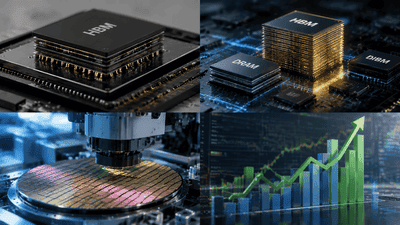


HBM Memory

China’s HBM Localization Progress: The Catch-Up Pace of CXMT and XMC

China’s drive to localize advanced memory technologies has accelerated over the past several years. High-Bandwidth Memory (HBM) sits near the center of that strategy because it is integral to AI accelerators, high-performance computing (HPC) and other strategic compute platforms. Two domestic players—ChangXin Memory Technologies (CXMT) and XMC (Xianghui Memory, commonly referred to as XMC)—have become focal points in assessing how quickly China can close the gap with international incumbents on HBM die, stacking, and packaging.

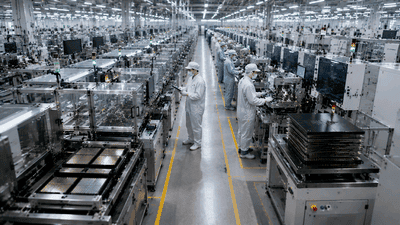
The HBM Capacity Expansion Race: SK Hynix, Samsung, Micron 2026 Capacity Map

In 2026 the high-bandwidth memory (HBM) market sits at a strategic crossroads. Driven by generative AI, large language models, high-performance computing (HPC), and advanced graphics, demand for stacked memory with ultra-high throughput continues to surge. This post maps the 2026 HBM capacity expansions from the three dominant players—SK Hynix, Samsung, and Micron—examines their strategies, regional footprints, technology choices, and the implications for customers, OEMs, and the supply chain.

HBM’s Crowding-Out Effect on DRAM Capacity: Supply Tightening Supports Traditional DRAM Prices

Between 2023 and 2026 the semiconductor industry witnessed a structural shift: a growing fraction of global DRAM wafer-equivalent capacity was repurposed for High-Bandwidth Memory (HBM) production. That reallocation—driven by hyperscaler commitments, higher ASP incentives, and strategic capex by major memory makers—has had a pronounced “crowding out” effect on commodity DRAM supply.

HBM’s Gross Margin Far Exceeds Traditional DRAM – A P&L Repair Effect for Memory Makers

High-Bandwidth Memory (HBM) has evolved from a niche, premium product to a strategic revenue generator for memory manufacturers. Compared with commodity DRAM, HBM commands higher average selling prices (ASPs), deeper integration services, and packaging premiums that lead to significantly superior gross margins. For memory makers facing cyclical commodity DRAM pricing and margin compression, HBM presents a meaningful “P&L repair” lever—a way to improve profitability, stabilize revenue mix, and insulate firms from the worst swings in the DRAM cycle.

HBM Re-rated from Cyclical to AI Growth Asset – A Valuation System Overhaul

High Bandwidth Memory (HBM) has long been categorized alongside other DRAM products as part of a cyclical commodity business, subject to booms and busts driven by general compute and consumer demand. In the AI era, that classification is increasingly inaccurate. As accelerators for training and inference depend more deeply on HBM for performance and energy efficiency, the asset’s economic profile is shifting from cycle-sensitive to structurally supported by long-term AI growth. This re-rating of HBM—from cyclic memory component to AI growth asset—forces a rethink of how investors, companies, and policymakers value and manage it.

Customer Concentration Risk in HBM: Over-Reliance on a Single AI Giant

High-Bandwidth Memory (HBM) sits at the heart of modern AI infrastructure. A small group of hyperscale cloud and AI platform providers now buys a very large share of global HBM output, often through multi‑year contracts and co‑investment arrangements. This buying power has helped finance HBM capacity expansion—but it has also created a new kind of risk for memory makers, OSATs, material suppliers and equipment vendors: extreme customer concentration.

The Bundled Investment Thesis of HBM and CoWoS: Indispensable Pair

In modern high-performance computing and AI system design, High-Bandwidth Memory (HBM) and Chip-on-Wafer-on-Substrate (CoWoS) packaging have evolved from complementary technologies into a tightly coupled investment thesis. This post examines why investors, system architects, and policymakers should view HBM and CoWoS as an intertwined opportunity—how technological synergies, supply-chain economics, customer demand patterns, and geopolitical dynamics create a single strategic story rather than two separate bets.

HBM’s Share of Global DRAM Capacity Exceeds 20% for the First Time in 2026

In 2026 the semiconductor industry recorded a milestone: high-bandwidth memory (HBM) has crossed the 20% threshold of global DRAM wafer-equivalent capacity for the first time. This is not merely a metric—it's a structural signal. It reflects changing customer priorities, deliberate capital allocation decisions by leading memory makers, and maturation of advanced packaging ecosystems that finally translate wafer output into finished, high-value modules at scale.

  • 1
  • 2
  • 3